RESEARCH
In 2019, Dr. Collins-Bennett came to Duke as a postdoctoral fellow drawn by the opportunity to integrate rigorous exercise physiology with behavioral science to address a question that had received comparatively little attention in exercise trials: why some individuals successfully adhere to exercise while others disengage. Working within the STRRIDE research program established by Dr. William Kraus and alongside Drs. Kim Huffman, Leanna Ross, and colleagues, she leveraged their complementary expertise in exercise physiology, clinical and translational research, and individual variability in exercise response to develop a new line of investigation focused on the behavioral response to exercise interventions themselves. Her work demonstrated that the factors associated with exercise adherence and dropout differ and that individuals who discontinue exercise interventions may represent a distinct population requiring specifically targeted strategies, rather than simply greater intervention intensity. This work established the foundation for her independent research program, which now investigates behavioral, clinical, biological, and genetic predictors of exercise and physical activity adherence to identify individuals at greatest risk for disengagement and ultimately develop interventions tailored to their needs. Her current NIH-funded portfolio includes studies of both genetic predictors of exercise and physical activity dropout and sex differences in physical activity participation.
Dr. Collins-Bennett also studies physical activity maintenance, particularly the critical transition from structured exercise to long-term, free-living physical activity. Building on the STRRIDE trials led by Dr. Kraus, which established the effects of differing exercise doses, intensities, and modes on cardiometabolic health, Dr. Collins-Bennett extended this work beyond the supervised intervention period to ask a different question: Do people sustain physical activity after an exercise trial ends, and what predicts who does? She has led long-term follow-up work examining barriers and predictors of physical activity maintenance more than a decade after structured exercise training and has extended this research to objective assessment of free-living physical activity using wearable devices. She also led a pilot study testing targeted health coaching to support physical activity and physical function following structured cardiac rehabilitation among older adults. As a board-certified health and wellness coach, Dr. Collins-Bennett integrates behavioral intervention expertise with exercise physiology to develop scalable strategies that help individuals translate the benefits of supervised exercise into sustainable physical activity in everyday life.
A complementary emphasis of Dr. Collins-Bennett’s independent research program is understanding sex differences in exercise response, physical activity participation, and long-term behavior maintenance. Her NIH-funded work examines sex-specific barriers and predictors of physical activity during and following cardiac rehabilitation, with the goal of identifying why opportunities for sustained physical activity may differ between women and men and informing more individualized approaches to behavioral support. In parallel, she has worked with Drs. Huffman and Kraus through the Molecular Transducers of Physical Activity Consortium (MoTrPAC) to investigate sex differences in the biological response to exercise and the potential influence of hormone replacement therapy on these responses. MoTrPAC provides a complementary opportunity to connect the behavioral heterogeneity central to Dr. Collins-Bennett’s research with biological heterogeneity in exercise response. Dr. Collins-Bennett is a co-investigator on Duke's MoTrPAC clinical-site award, and she and Dr. Huffman have also collaborated on work focused on translating MoTrPAC discoveries into clinical care.
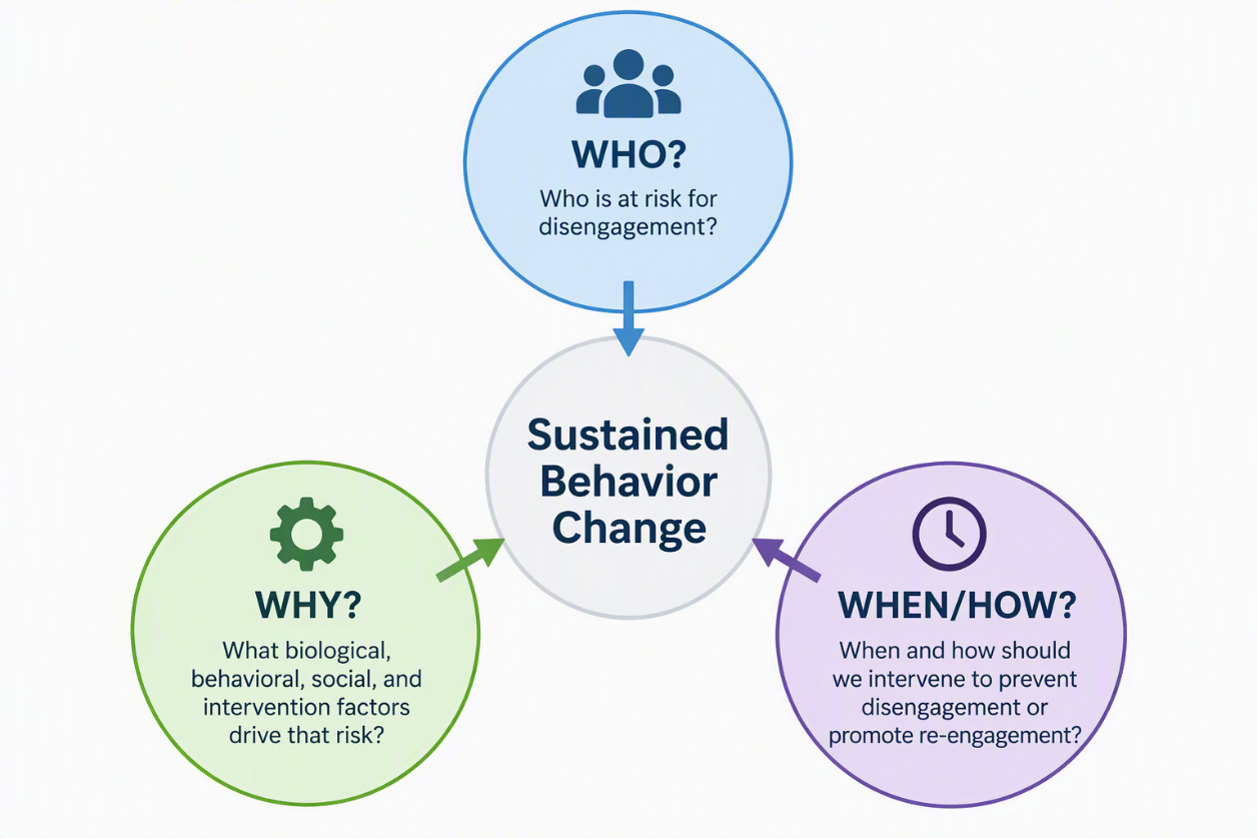
Together, these complementary lines of research seek to move beyond asking whether exercise works to understanding for whom sustained behavior change is most challenging, why individuals follow different behavioral trajectories, and how behavioral and biological information can be used to deliver the right support to the right person at the right time.